Star Wars: Droid Repair Bay
A Google Daydream port of Star Wars: Droid Repair Bay — a collaboration between ILMxLAB, Schell Games, and Google.
Overview
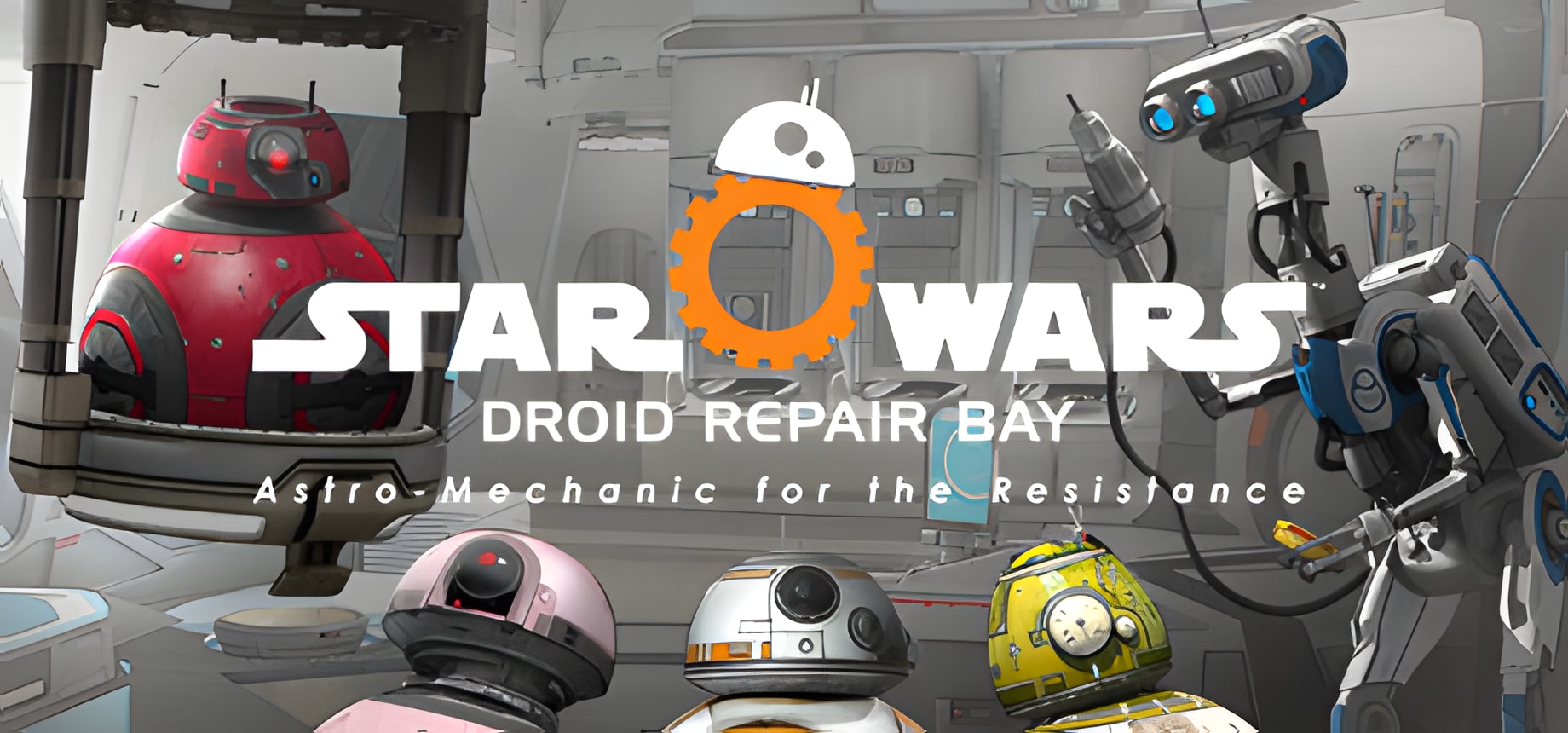
Star Wars: Droid Repair Bay is a free, narrative-driven VR experience developed by Lucasfilm's ILMxLAB in collaboration with Pittsburgh's own Schell Games. Released in December 2017 to tie into The Last Jedi, it puts you in the shoes of an astromech mechanic for the Resistance. Aboard General Leia's ship, your mission is to diagnose, repair, and test BB-8 and a cast of unique astromech droids — tackling hands-on puzzles to replace damaged components and swap out bad chips, then using a laser pointer to test each droid's hilarious, individual personality.
It leans hard into what VR does best: reaching inside a droid and fixing it by hand is an experience that simply doesn't translate to a flat screen. Originally launched on Samsung Gear VR, the experience was later brought to Google's Daydream platform so it could reach a wider set of mobile VR headsets.
My Role
My role was to port the existing Gear VR build over to Google Daydream. That meant swapping out the Gear VR platform integration for the Google Daydream SDK end to end — re-integrating head tracking, the stereo camera rig, and the reticle-based gaze system, then rebuilding input around the Daydream 3DoF controller.
The bigger challenge was performance. Daydream-ready phones ran on a tighter, thermally constrained mobile GPU budget, and mobile VR is unforgiving — dropping below framerate breaks presence and induces discomfort, so a locked frame rate across both eyes was non-negotiable. I profiled the port on target hardware and worked the GPU down to budget: cutting draw calls through batching and texture atlasing, simplifying materials into cheap mobile shaders, trimming overdraw and transparency, adding LODs, and leaning on single-pass stereo rendering and baked lighting. The result was a smooth, comfortable Daydream experience that preserved the fidelity of the original.
Want to see more?